Okay, here is a professionally formal article based on the reference content you provided.
The Cost of the AI Capital Spending Frenzy: Free Cash Flow Crisis and Waning Market Confidence for Tech Giants
[Introduction]
Amid global geopolitical risks, such as the resurgence of conflict in Iran casting a shadow over the macroeconomic outlook, another storm is brewing on Wall Street. Investors are growing increasingly concerned about the hundreds of billions of dollars in massive investments by tech giants in artificial intelligence (AI). This test of confidence in the sustainability of the "AI dividend" triggered a massive market sell-off on Thursday, signaling that the logic underpinning the bull market in US stocks for over three years is facing a severe challenge.
1. The "Magnificent Seven" Faces a "Valuation Reckoning"
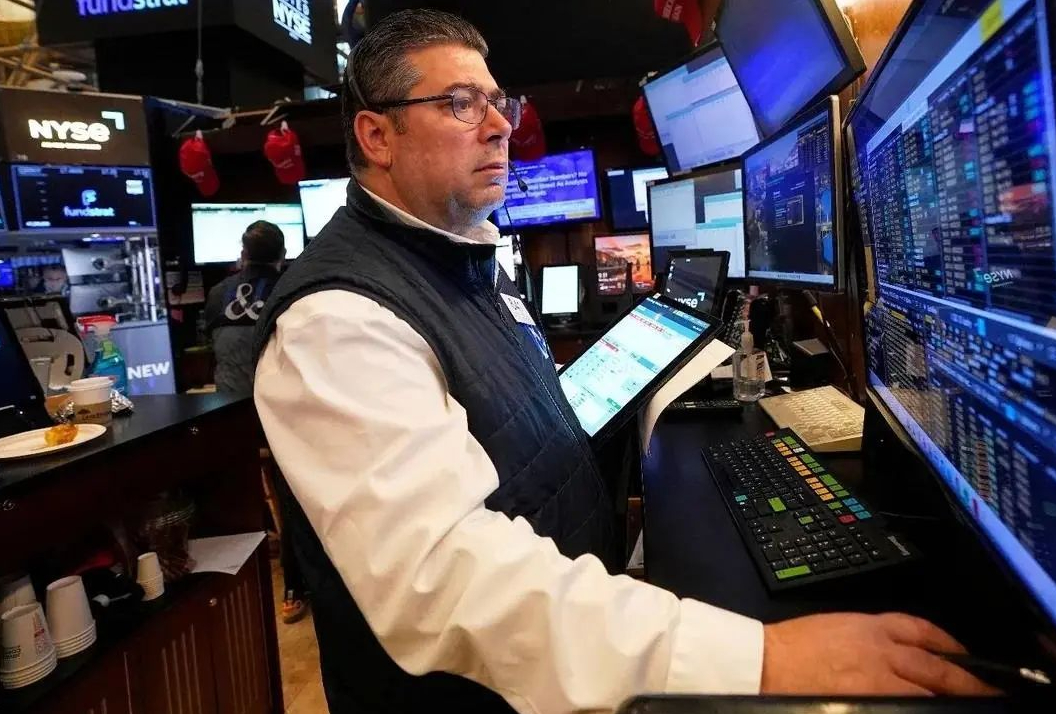
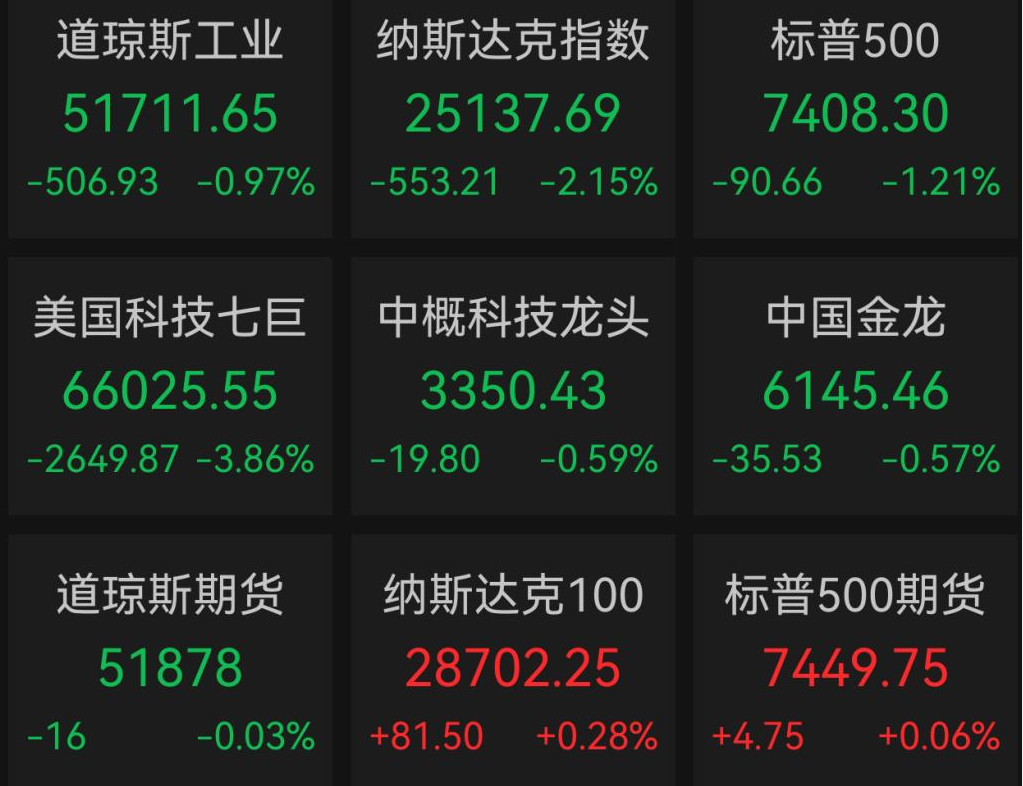
On Thursday, the "Magnificent Seven" in US stocks experienced their darkest day since the "Liberation Day" tariff turmoil in April 2025. The index tracking these tech giants plunged 4.8%, with a combined market cap loss of $797 billion in a single day. The sell-off quickly spread to the broader market, dragging the S&P 500 down 1.2% and the tech-heavy Nasdaq 100 down sharply by 1.9%.
Specifically, Google parent Alphabet led the decline, plunging about 7% in a single day, recording its largest market cap loss on record, exceeding $293 billion. Tesla, due to a poor earnings report, saw its stock price plunge 15%, marking its worst-ever performance on the day after an earnings release. The wave of selling also swept through other giants: Meta fell 3.4%, Microsoft fell 2.3%, and Amazon fell 4.6%. Currently, the index is down 11% from its late-May record high, with a cumulative market cap loss of approximately $2 trillion.
2. Violent Sell-Off: Capital Expenditure Commitments Break Free Cash Flow
The trigger for this "valuation reckoning" was the earnings reports from Alphabet and Tesla released after the closing bell on Wednesday. The two reports sent traders into a panic, deeply questioning whether the "AI dividend" can be sustained. Alphabet raised its capital expenditure forecast for this year to $205 billion, well above market expectations; after reporting lower-than-expected profits, Tesla CEO Elon Musk admitted that 2026 will be "a year of massive capital expenditure scale."
Wall Street investors have to face a new reality: these tech giants may no longer be the inexhaustible "money printers." The market's focus has shifted from revenue growth to a more critical financial metric—free cash flow. On Thursday, the buzzword on the market was undoubtedly "negative free cash flow." Alphabet reported negative free cash flow of $5.9 billion, the first time since its listing in 2004; Tesla also fell into negative territory. Analysts expect Meta and Amazon to also report negative free cash flow when they release their earnings next week.
"The real problem is the current scale of spending; no one knows what the return on investment really is," pointed out Ken Mahoney, CEO of Mahoney Asset Management. He added that the macro backdrop (such as rising oil prices) exacerbates the pressure, calling it "a perfect storm."
3. The Deeper Risks of "Negative Free Cash Flow": Business Model Disruption?
These global tech behemoths, once renowned for ample cash and robust balance sheets, are now in intense transformation pains. They are betting the future on AI applications, massively investing in building data centers. However, to fund AI infrastructure, these companies are also accumulating unprecedented debt. On Thursday, Alphabet's century bonds issued earlier this year fell below 90% of face value for the first time, with risk premiums soaring, reflecting market concerns about its debt-servicing ability.
Meanwhile, lower-cost open-source AI systems are threatening the business models of top AI labs, whose enormous demand for computing power underpins the massive investment spending. Among the "hyperscale cloud providers," Microsoft is currently the only company expected to still generate positive cash flow while doubling its capital expenditure.
Mike O'Rourke, chief market strategist at JonesTrading, warned: "Investors are deeply worried because these companies seem to be destroying the most successful, most expansionary, and most investor-friendly business model in US stock market history."
Conclusion: The Logic of the Bull Market Faces Reassessment
Free cash flow, the net cash remaining after deducting operating expenses and investments, is a core metric of a company's ability to reward shareholders (through dividends and buybacks). In the past, this metric served as a shield against criticism of "excessive AI spending"—investors believed the spending spree was funded by giants with "fortress-like" balance sheets. Now, cash reserves are shrinking fast, and the market's patience with Silicon Valley's massive spending is about to face a severe test.
David Wagner of Aptus Capital Advisors believes: "Everyone expects spending growth to slow down, trying to find the first company that 'blinks' on capital expenditure expectations, and it seems this is just the beginning." This may mean that the long bull market in US stocks, driven by the AI narrative and built on massive capital expenditure, is entering a new phase full of uncertainty.