
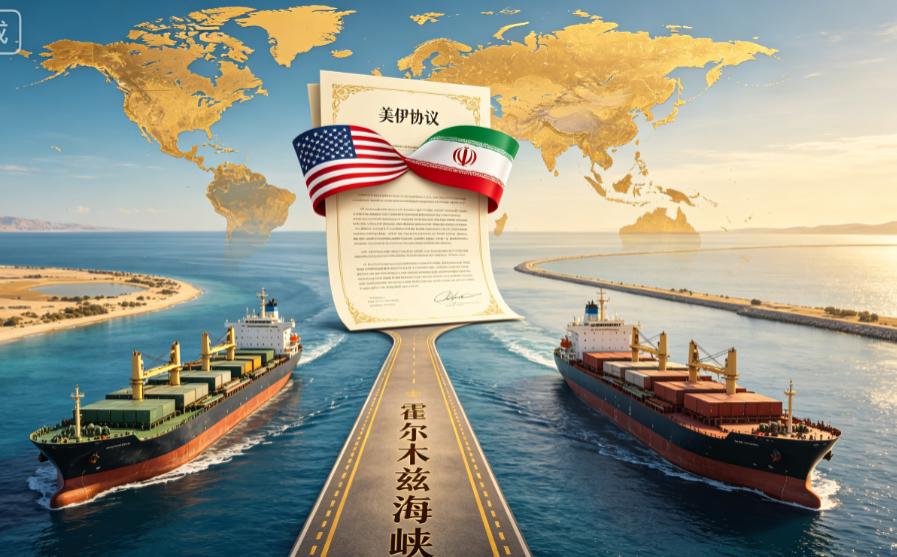
Certainly, below is a professionally written article in a formal style as requested.
The "Safety Valve" on the Oil Route: The U.S.-Iran Deal Reshapes Expectations for Transit Through the Strait of Hormuz
Keywords: U.S.-Iran relations; Strait of Hormuz; geopolitics; international energy security; shipping security; agreement
Introduction: The "Chokepoint" of Global Energy and the Focus of Geopolitical Rivalry
The Strait of Hormuz, this narrow waterway, carries about one-fifth of the world’s oil shipments and serves as the "lifeline" linking Persian Gulf oil producers with the global energy market. Its strategic importance is such that even the slightest disturbance can trigger sharp swings in international oil prices and shock the global energy landscape. For a long time, tensions between Iran and the United States and its allies have made the Strait of Hormuz not only an economic artery but also a "powder keg" of great-power rivalry and regional conflict. Frequent incidents such as tanker seizures, mine deployment, and military standoffs have placed the safety of this shipping lane under high uncertainty. However, a series of agreements recently reached between the United States and Iran through mediation, especially phased consensus on regional security and nuclear issues, has brought a notable positive shift in expectations for transit through the Strait of Hormuz. This is not merely a diplomatic thaw; it may also become a key turning point in reshaping global energy security and the regional geopolitical order.
I. Background to the Agreement: Pressure, Dilemmas, and Strategic Shift
The hostility between the United States and Iran runs deep; the recent shift in relations is no accident, but the result of multiple pressures and strategic calculations.
- Iran’s “maximum pressure” and strategic dilemma: After the United States unilaterally withdrew from the Joint Comprehensive Plan of Action (JCPOA) and imposed a “maximum pressure” policy on Iran, Tehran suffered a heavy blow economically, yet it was not forced into substantive concessions on the nuclear issue or regional behavior. Instead, Iran countered by accelerating its nuclear program, increasing uranium enrichment levels, and strengthening cooperation with Russia and non-Western countries. However, prolonged sanctions, domestic social pressure, and the drain of regional proxy forces also made Iran aware that endless confrontation is not a sustainable strategy. Seeking some form of diplomatic breakthrough to secure sanctions relief and economic breathing room became the rational choice.
- America’s Middle East retrenchment and energy anxiety: The United States has shifted its strategic focus to the Asia-Pacific and is scaling back in the Middle East. Ongoing military involvement and the high cost of troop deployments are facing growing scrutiny at home. At the same time, the global energy crisis triggered by the Russia-Ukraine war has made the United States and its allies acutely aware of the importance of securing energy supplies and stabilizing oil prices. Any crisis in the Strait of Hormuz would immediately feed into global gasoline prices and directly affect domestic U.S. politics. Therefore, avoiding direct military conflict with Iran and seeking a “soft” solution to stabilize transit security in the Strait of Hormuz better serves current U.S. strategic interests.
- Positive momentum from third-party mediation: Oman, Qatar, and other Gulf states, as well as international actors such as China, have played a crucial bridging role between the United States and Iran. China’s successful facilitation of the restoration of diplomatic relations between Saudi Arabia and Iran demonstrated its ability to resolve regional tensions, and its proposed Global Security Initiative also offers a new path for addressing complex geopolitical conflicts. The active participation of these third parties created the necessary communication channels and trust basis for direct or indirect U.S.-Iran negotiations.
II. Core Content of the Agreement and Its Multiple Safeguards for Shipping Safety
Although some details of the U.S.-Iran agreement remain confidential, its core logic is “security in exchange for benefits”: by means of limited reciprocal measures, it reduces the risk of direct conflict and thereby stabilizes the transit environment in the Strait of Hormuz.
-
Prisoner swap and asset unfreezing as trust-building: The most immediate result was a prisoner exchange agreement, while the United States agreed to allow South Korea to unfreeze about $6 billion in Iranian oil funds. This move is seen as an “icebreaker” that breaks the deadlock. Though limited, it shows that both sides have the willingness and ability to engage in pragmatic dialogue on specific issues. This has created a positive atmosphere for broader negotiations on security matters.
-
Informal understandings and a “green corridor” mechanism: According to multiple reports, the two sides reached an unwritten “understanding,” the core of which is that Iran guarantees it will not attack commercial shipping in the Strait of Hormuz, especially vessels linked to the United States and its allies. In return, the United States pledges to strengthen patrols in the Persian Gulf while avoiding new seizure actions against Iranian tankers. More importantly, this tacit arrangement could give rise to a “green shipping corridor” mechanism, through which both sides communicate via third parties such as Qatar or Oman to provide advance notice and confirmation of ships about to pass through the strait, greatly reducing the risk of misjudgment and accidental conflict.
-
Toleration and management of the “shadow fleet”: Iran has long relied on a “shadow fleet” that disables shipboard automatic identification systems (AIS) to export oil. The agreement may not strictly prohibit this practice, but the two sides may have reached a tacit understanding: the United States would reduce strict inspections and seizures of Iranian tankers, while Iran would ensure that its vessels maintain normal navigation when passing through the Strait of Hormuz and would not use violence, coercion, or dangerous maneuvers to disrupt other commercial ships.
III. The Game Among All Sides: Expectations, Interests, and Potential Risks
The positive expectations for transit safety created by the agreement are built on a complex balancing of interests among all sides.
- For Iran: The main gain is stable fiscal revenue and reduced sanctions pressure. Unfrozen assets and smoother oil exports will inject much-needed liquidity into the domestic economy. In addition, by demonstrating its ability to control the situation in the Strait of Hormuz, Iran has enhanced its voice in regional affairs.
- For the United States and its Gulf allies: It avoids the costly outcome of a tanker seizure incident escalating into direct military conflict. Stabilizing the global oil market and easing oil price risks are in line with the interests of U.S. domestic politics and allies. Gulf oil producers such as Saudi Arabia and the UAE also welcome this, as they are heavily dependent on the export route through the Strait of Hormuz; a stable transit environment is a core economic and national security interest.
- For international shipping and energy markets: The agreement has brought an immediate decline in the “risk premium.” The reduced risk of war lowers shipping insurance costs, while shipowners and traders gain greater confidence in sailing through the Strait of Hormuz. This is directly reflected in the stabilization and pullback of international crude oil futures prices, providing valuable support for the global fight against inflation.
However, this positive outlook is not without risk. The fragility of the agreement is obvious: it is based on informal understandings and lacks legally binding enforcement mechanisms; it does not resolve the fundamental disputes between the two sides over nuclear issues, missile programs, or regional proxies; and any conservative hardliners within either side could undermine it. Therefore, this agreement is more like a “safety valve” than a “permanent peace treaty.”
Conclusion: Fragile Stability and an Uncertain Future
The phased agreement reached between the United States and Iran has undoubtedly created a rare and foreseeable window of stability for the long-tested Strait of Hormuz. It proves that even in the most hostile relationships, pragmatic communication and limited cooperation based on actual interests remain possible. For the international energy market, the agreement has acted as an effective “stabilizer,” temporarily reducing geopolitical risk.
However, we must clearly recognize that this is only an improvement in “transit expectations,” not the ultimate guarantee of “route security.” The long-term security of the Strait of Hormuz ultimately depends on whether the most fundamental contradiction between the United States and Iran can be fully resolved — a comprehensive, effective, and verifiable solution to the Iranian nuclear issue. The current agreement does not address this core problem and is more like tactical crisis management.
Looking ahead, transit prospects through the Strait of Hormuz will likely show a pattern of “short-term stability, long-term rivalry.” In the short term, transit risks will fall significantly, shipping costs will decline, and global energy supply tightness may ease further. In the long term, however, the structural contradictions in U.S.-Iran relations could be reignited at any moment by new incidents, and the agreement itself could collapse because of any “crossing the line” behavior during implementation by either side.
Global energy security and route stability cannot and should not rely solely on fragile bilateral tacit understandings. The international community, especially major consumer countries and responsible powers, should seize the current relatively relaxed “window of opportunity” and promote a more inclusive, multilateral security mechanism for transit through the Strait of Hormuz. This requires encouraging the United States and Iran to return to nuclear negotiations under a proper multilateral framework, while strengthening joint development of maritime order, shipping rules, and maritime security capacity in the region. Only by transforming temporary agreements into an institutionalized and transparent multilateral security framework can the Strait of Hormuz — the global economy’s “major artery” — truly be fitted with a permanent safety valve, ensuring that it remains basically stable and open in the face of any future geopolitical storm.

